World sims, o3 and multi-agent frameworks
Last week, I sat down with a simulation of my family at dinner, ten years in the future. My daughter was twelve, discussing her summer plans. We talked about the AI-powered education system she’d grown up with, and how different it was from my traditional schooling. This wasn’t a daydream. It was a world simulation powered by AI, a glimpse into potential futures.
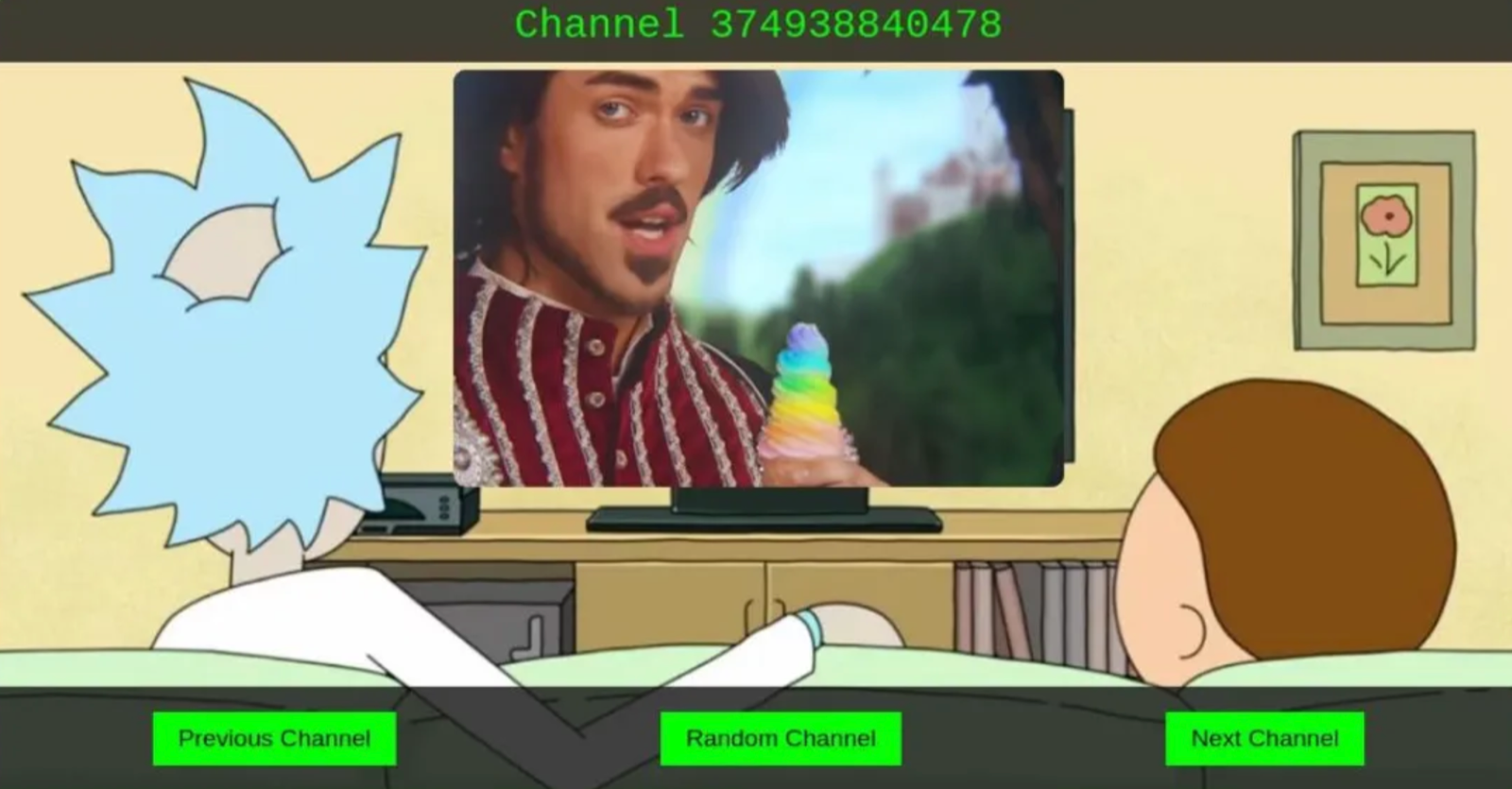
Interdimensional Cable TV on WebSim
The state of world simulation
Two distinct approaches are changing how we simulate and understand complex systems. The first uses large language models as simulation engines. WorldSim transforms an LLM into a world simulation program through clever prompting, enabling everything from family dinner simulations to product interaction testing. WebSim takes this further, creating an entire imaginary internet that responds dynamically to user navigation.
The second path focuses on visual and physical simulation. Projects like Odyssey and World Labs are building text-to-world models using real-world camera data. Just last week we saw Genesis, a generative AI physics engine that claims simulation speeds up to 430,000 times faster than real time. While LLM simulations excel at modeling social interactions and abstract concepts, these visual approaches capture the physical world with far higher fidelity.
o3 and the multi-agent breakthrough
OpenAI’s o3 is a fundamental breakthrough in how AI systems adapt to novel situations. What makes o3 different is that it treats Chain of Thought as a program synthesis and verification problem, demonstrated by its performance on the ARC-AGI benchmark (75.7% in high-efficiency mode and 87.5% with increased compute). Unlike traditional LLMs that are next token predictors, o3 can actively recombine knowledge into new programs through natural language reasoning. It generates multiple solution attempts and uses an evaluator model to verify them against each other, similar to AlphaZero’s Monte-Carlo tree search.
This capability is particularly significant for world simulation because it enables something previously impossible: reliable adaptation to novel scenarios. Just as humans can reason through unfamiliar situations by combining existing knowledge in new ways, o3 can generate and verify multiple reasoning paths to work through complex simulated scenarios. While this comes at a high computational cost, it opens the door to more sophisticated and trustworthy world simulations.
However, there’s an important caveat: o3’s verification mechanism, like AlphaZero’s approach, excels in domains with clear, objective success criteria. In the ARC-AGI benchmark, answers are definitively right or wrong. World simulations, particularly of social and human systems, often deal with more subjective outcomes where “correctness” is less clear-cut. How do you verify the accuracy of a simulated family dinner conversation or the realism of an organizational culture shift? These subjective domains present a fundamental challenge for current verification approaches. While we can use heuristics and expert-defined criteria, bridging the gap between objective verification and subjective simulation remains an open problem.
The implications for multi-agent systems are still profound, but perhaps more nuanced than initially apparent. o3’s verification mechanism shows how multiple AI agents can cross-check and validate each other’s reasoning, but we’ll need new approaches to extend this capability to more subjective domains. This natural language program search and execution approach, while computationally intensive, provides a framework for building multi-agent simulations where agents can truly learn and adapt to novel situations, even as we work to solve the verification challenge in subjective domains.
The multi-agent framework explosion
Several key innovations are pushing multi-agent systems beyond the limitations of single-agent approaches. Instead of one AI trying to reason about everything, we now have frameworks enabling teams of specialized agents to work together, each bringing distinct expertise.
Role-based specialization
The most intuitive approach treats agents as specialized team members with distinct responsibilities and expertise. CrewAI exemplifies this model, enabling the creation of AI teams where each agent brings specific capabilities, much like assembling an expert task force. This approach is particularly powerful for complex tasks that benefit from diverse perspectives and specialized knowledge.
Structured communication patterns
Advanced frameworks are developing more deliberate ways to manage agent interactions and information flow. LangGraph pioneers this through graph-based architectures, where each agent becomes a node in a communications network. This structured approach creates clear pathways for information sharing and decision-making, while Microsoft’s AutoGen demonstrates how such patterns can enable complex multi-turn dialogues between agents.
State management strategies
A fundamental challenge in multi-agent systems is managing shared state and memory. There are two contrasting approaches: stateful architectures that maintain persistent context (like LangGraph’s graph state) versus stateless designs that prioritize simplicity and scalability (as demonstrated by OpenAI’s Swarm framework). Each approach offers different trade-offs between consistency and operational overhead.
Reasoning-action loops
Modern frameworks are moving beyond simple request-response patterns to enable richer behavioral loops. The ReAct framework pioneered this approach, creating tight integration between reasoning and action. Agents can think through consequences, take actions, observe results, and adjust their strategy.
The real challenge isn’t getting agents to talk to each other so much as maintaining a coherent world state while allowing parallel actions and interactions. These architectural advances are complementary rather than competitive. The most sophisticated implementations often combine multiple approaches, like using role-based specialization within a structured communication framework, or implementing reasoning-action loops in a stateless architecture. As these frameworks mature, we’re likely to see further convergence of these capabilities into more comprehensive solutions that can maintain consistency while enabling true parallel agent operations.
Real-world applications
The convergence of world simulations, o3’s verification capabilities, and multi-agent frameworks enables a new class of applications:
Personal decision-making
The most immediate impact might be on individual decision-making. Imagine simulating different career paths, complete with their effects on family dynamics, health, and work-life balance. “Financial twins” could test investment strategies against simulated market conditions, while retirement planning could account for countless variables from health to inflation. These simulations move beyond simple projections to model complex interactions between choices.
Organizational design
At the enterprise level, these technologies could change how we structure and operate organizations. Imagine being able to model different team configurations and immediately see their impact on collaboration patterns and innovation output. Management styles that might take years to evaluate in the real world could be simulated in minutes, revealing their effects on employee satisfaction and team dynamics. Organizations could test different approaches to complex challenges like merger integrations, hybrid work policies, and culture development, running parallel simulations to identify potential pitfalls before making real-world commitments.
Product development
The product development lifecycle could be fundamentally reimagined through simulation environments like these. Instead of limited focus groups or basic A/B tests, teams could create richly detailed virtual environments populated with diverse user personas, each interacting with products in unique ways. Thousands of feature variations could be tested simultaneously, while complex system interactions could be modeled at scale. Customer support scenarios could be simulated across countless variations, helping teams anticipate and address potential issues before they impact real users. Product adoption curves could be modeled in far more detail, taking into account complex market dynamics and user behaviors.
Scientific research
In the scientific domain, these technologies could accelerate discovery by making it possible to model complex systems at a depth we can’t reach today. Biological researchers could simulate cellular interactions, while climate scientists could model environmental changes through agent-based simulations. Drug development could be accelerated through detailed interaction modeling, while theoretical physicists could explore complex concepts through multi-agent simulations. Even evolutionary biologists could gain new insights by modeling species competition and environmental adaptation in ways previously impossible.
Policy planning
The public sector stands to gain entirely new approaches to policy development and evaluation. Instead of relying on historical data and basic projections, policymakers could model the cascade of effects that policy changes might have across different societal groups. Urban planners could simulate decades of city development in minutes, while emergency responders could test crisis management strategies across countless scenarios. Economic policies could be evaluated through simulations that account for complex human behaviors, while transportation systems could be optimized through detailed modeling of traffic patterns and human movement.
Healthcare
Healthcare delivery could be transformed through personalized simulation. Treatment protocols could be tested and refined in virtual environments that account for individual patient characteristics and countless variables. Hospital systems could optimize their resource allocation by simulating various crisis scenarios, while new healthcare delivery models could be evaluated in detail before deployment. Public health responses could be improved through epidemiological modeling, while personalized medicine could advance through the development of detailed patient “digital twins” that enable truly individualized treatment approaches.
Each of these applications benefits from o3’s verification capabilities and the orchestration power of multi-agent frameworks. In organizational design, for example, one agent might simulate employee behaviors while another models management responses, with o3’s verification keeping the interactions realistic and consistent.
Implementation challenges and considerations
While the combination of world sims, o3, and multi-agent frameworks is powerful, implementing these systems presents several key challenges:
State management
The first major hurdle is state management, a challenge that becomes exponentially complex as simulations scale. Maintaining consistency across multiple agents requires careful coordination, especially when agents make simultaneous updates to the world state. These updates can often conflict, requiring resolution strategies that preserve the simulation’s logical coherence. The challenge is compounded by the fundamental limitations of current AI systems, particularly their context windows and memory constraints. Even more demanding is the need to coordinate parallel actions while preserving causality: cause and effect relationships have to remain logical even as multiple agents act independently.
Performance and scalability
Performance and scalability concerns present another layer of complexity. As simulations grow more complex, balancing computational resources across multiple agents becomes increasingly difficult. Real-time simulations particularly suffer from latency issues that can disrupt the natural flow of agent interactions. Resource optimization becomes critical in complex scenarios with many agents and interactions. Each additional agent multiplies the computational overhead, so there’s a delicate balance between simulation fidelity and system performance.
Integration challenges
Integration challenges emerge when combining different frameworks and technologies. Each framework brings its own assumptions and architectural choices, which makes clean integration a real technical challenge. API rate limits and costs create practical constraints on system scale, while consistent behavior across different language models requires careful engineering. Perhaps most critically, these systems need to fail gracefully rather than catastrophically when components don’t perform as expected.
Current limitations
Current technical limitations create fundamental constraints on what’s possible. Context windows, while expanding, still restrict the amount of information available to any single agent at a time. Computational costs can become prohibitive for complex simulations, especially when running multiple scenarios in parallel. Verification accuracy remains a persistent challenge, particularly in subjective domains where “correct” behavior is less clearly defined. Managing hallucinations becomes increasingly difficult as scenarios grow more complex, requiring detection and correction mechanisms to maintain simulation reliability.
There’s no one-size-fits-all solution here. Each framework offers distinct trade-offs. CrewAI excels at task-based workflows but may struggle with real-time interactions. LangGraph offers powerful state management but requires more setup complexity. AutoGen provides flexible agent communication but might need additional structure for complex scenarios. Swarm’s stateless approach offers simplicity but may require external state management for complex applications.
The path forward
Looking ahead to 2025, I expect we’ll see world simulations and multi-agent frameworks converge into platforms that combine o3’s verification capabilities with rich environmental modeling. Imagine spawning a complete simulation from a simple prompt: not a static environment but a living world populated by AI agents with distinct personalities and expertise, each generating and verifying scenarios just as o3 does with mathematical problems today.
What excites me is how these technologies complement each other. World simulations provide the environment, o3 offers the verification mechanism, and multi-agent frameworks enable complex interactions between specialized agents. Together, they’re creating a new way to explore possible futures and make better decisions.
The academic world may focus on advancing the visual and physics aspects, but I’m betting on knowledge-based simulations as the bigger opportunity. o3’s success shows that combining multiple reasoning paths with strong verification can solve complex problems more effectively than single-agent approaches. Extending this to world simulation, where multiple AI agents with different perspectives and expertise each generate and verify scenarios, turns simulation into a new way of solving problems and making decisions.
We’re moving from an era of static analysis to one of dynamic exploration, from asking “what happened?” to “what could happen?” And that’s a future worth simulating.